
Storm Damage Restoration in Dallas, TX
Big old trees in Preston Hollow, Lakewood and Kessler Park mean storm calls in Dallas often start with a limb through the roof.
Emergency cleanup, drying and repairs after hail, high winds, fallen trees and wind-driven rain get inside.
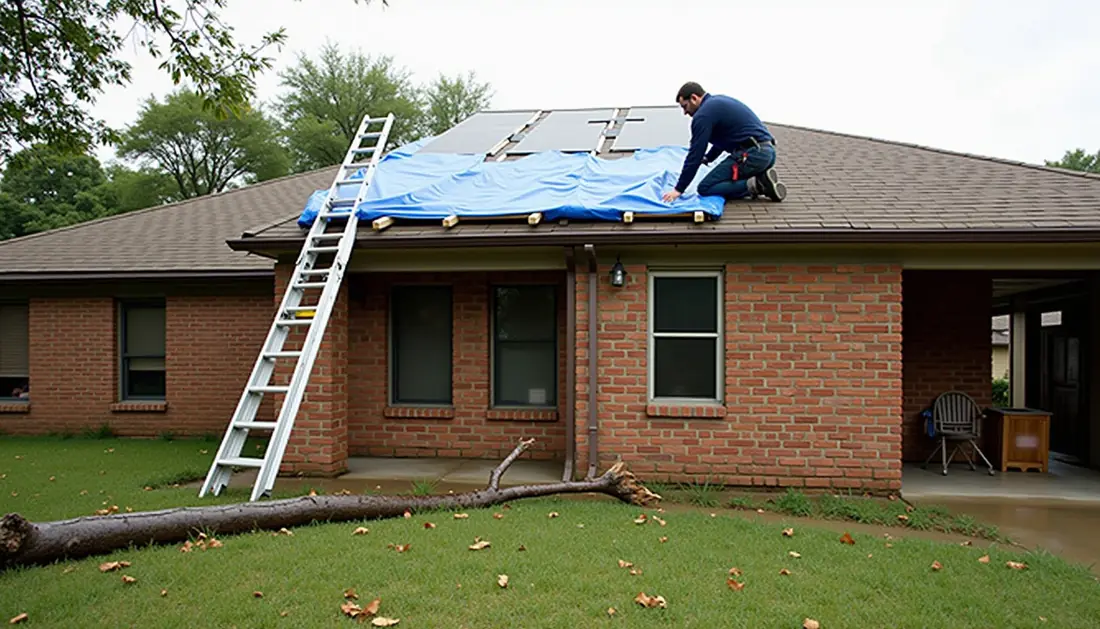
North Texas storms don't mess around. Spring and early summer bring hail, straight-line winds and the occasional tornado warning, and any one of them can open a path for water into the house. A cracked skylight, a few lifted shingles, a branch through the roof or a window broken by hail is all it takes for rain to reach the attic, the insulation and the ceilings below.
Storm damage restoration is about two things happening fast. First, the building has to be protected from the next round of rain, which means tarping the roof or boarding up a broken window until permanent repairs can be made. Second, the water that already got in has to come out before it soaks into more drywall, insulation and flooring.
Inside, we work it like any water damage job, with one difference. Rain that comes through the roof starts out fairly clean but picks up dirt and debris from the attic on its way down, and water that came in at ground level is treated as contaminated. We extract it, pull out wet insulation and ceiling drywall that can't be dried, then dry the framing and attic decking to verified readings.
After a big hail day in DFW, roofers and contractors get booked up fast. Replacing the roof is a roofer's job, but we can protect the inside of your home while you wait for one, and we document everything so the interior work and the roof claim line up.
Storm damage overlaps with our flood damage restoration when rising water is involved, and with water mitigation and structural drying once the source is under control. For storm-damaged offices and stores, see commercial water damage restoration. Before you file, read how to file a water damage insurance claim in Texas.
Stay away from downed power lines and anything they're touching, including fences and puddles. If a ceiling is sagging or bulging with water, keep everyone out of that room. Don't go up on the roof. Wet shingles are slick, and storm-damaged decking can give way.
Once it's safe, take photos and video of the outside and inside of the house, put buckets under active drips and move furniture and electronics away from wet areas. Write down the date and time of the storm, because your insurer will ask for it.
Hail is a regular part of spring in Dallas-Fort Worth, and the busiest stretch usually runs from March through June. Severe thunderstorms can also bring straight-line winds strong enough to drop large trees, and tornado warnings aren't unusual in spring.
Older roofs, skylights and attic vents take the brunt of it. If your roof is getting up in years, a quick look after each major storm can catch small openings before they turn into soaked insulation and a ceiling repair.
Drying attics, ceilings and walls after hail cracks shingles, skylights and windows.
Tarping, board-up and water cleanup when wind or a tree opens up the roof or walls.
Opening and drying ceilings, insulation and framing soaked by storm leaks.
Temporary protection that keeps the next rain out until permanent repairs are made.
After a hailstorm, the ceiling stain usually isn't right under the damage. Water runs along the rafters and across the top of the drywall before it drips, so we go up into the attic and follow it back to where it actually got in.
Storm work is priced by the temporary protection needed, how many rooms and ceilings took water, how much material has to come out and the interior rebuild. Wind and hail damage is usually a homeowners claim, while rising floodwater falls under flood insurance, so we document the two separately.
We provide storm damage restoration in Dallas and every city listed below. Open your city to see the neighborhoods and ZIP codes we cover there.
Big old trees in Preston Hollow, Lakewood and Kessler Park mean storm calls in Dallas often start with a limb through the roof.
Spring hail storms regularly cross Collin County, and in Plano, roof and skylight leaks often follow them.
In Frisco's two-story homes, a storm leak in the attic can work through the upstairs ceiling and reach the first floor.
McKinney's older homes near the square have mature trees and older roofs, while newer neighborhoods take hail on wide-open lots.
In Irving, wind-driven rain can get in around windows and balconies in apartment and condo buildings, not only through roofs.
Homes near Lake Ray Hubbard and the open areas of North Garland catch strong winds, and older roofs there take a beating in hail season.
Lakefront homes in Chandlers Landing and The Shores take wind-driven rain off Lake Ray Hubbard during spring storms.
Spring hail and wind storms in Arlington crack skylights and lift shingles, and the water shows up in attics and ceilings.
Older roofs and big trees in neighborhoods like Fairmount and Arlington Heights make wind and fallen-limb damage a real risk in storm season.
Wind and hail damage, and the rain that gets in through the openings they create, is usually covered by a standard homeowners policy, often with a separate wind and hail deductible. Rising water from flooding is not, and needs flood insurance. Read your policy and report the damage promptly.
No. Most policies expect you to take reasonable steps to prevent more damage. Take photos and video first, then get the water out and the roof covered. We document the damage before and during the work so the adjuster can see what was there.
Yes. Emergency tarping is part of our storm response. A tarp is temporary protection, not a repair. It keeps rain out until a roofer can fix or replace the damaged section.
Look for dented gutters, downspouts and vents, granules collecting at the bottom of the downspouts, cracked skylights and new ceiling stains after the next rain. A roofer can confirm it. Don't climb onto a wet or damaged roof yourself.
Usually. Blown-in and batt insulation that gets soaked packs down, loses most of its insulating value and holds moisture against the drywall and framing. We take it out so the ceiling and joists can dry, then replace it during repairs.
Get everyone out of the affected rooms and stay clear of downed power lines. Call 911 if anyone is hurt or lines are down. A tree service needs to remove the tree, and then we can tarp or board up the opening and start drying the inside.
The emergency part, tarping and getting the water out, usually happens in the first day or two. Drying takes several days. Interior repairs depend on the roof repair schedule, since ceilings shouldn't be rebuilt until the roof is fixed.
Every hour counts. Drywall and flooring start absorbing water within minutes, and mold can start within 24 to 48 hours. Call now. We're open around the clock.
(469) 306-9109Open 24 hours, 7 days a week · Dallas and nearby cities