
Water Damage Restoration in Dallas, TX
From slab homes in Lakewood and Lake Highlands to condo towers in Uptown and Downtown, we plan each restoration around the building, the HOA rules and the people living there.
The whole job in one plan: stop the water, dry the building, clean up and put the rooms back the way they were.
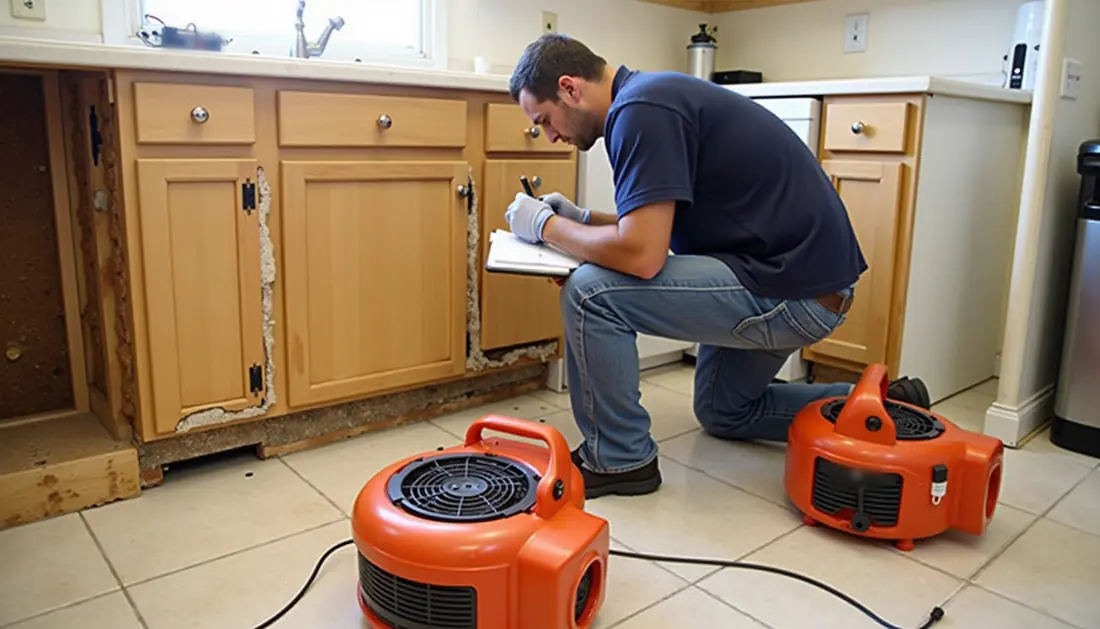
Water damage restoration is everything it takes to get a wet home or business back to normal. That means stopping the water, getting it out, drying the building to a measured standard, cleaning what it touched and then rebuilding the parts that had to come out. Most people only notice the fans. The work that decides how the job turns out happens before and after them.
We run all of it as one project. The crew that pulls the water out is the same team that tracks the drying and puts the drywall, baseboards and flooring back, so you don't have to explain the story twice and nothing falls between two contractors. You get one point of contact, one schedule and one set of records for the whole job.
Every Dallas loss is a little different. A supply line under a kitchen sink in a Lakewood ranch house is a clean water job that might be dry in a few days. A slow shower pan leak in an Uptown condo can sit inside a wall for months before it shows. A storm that pushes water under a garage door in Oak Cliff brings dirty water and a different cleanup. The first visit is about figuring out which kind of job you have, because that sets everything after it.
Restoration also covers the things people forget about until later: cabinets that swelled at the toe kick, the subfloor under vinyl plank that never felt wet, insulation behind a wall that looks fine, and the smell that shows up two weeks after a quick dry-out. We check for those on purpose, because they're the usual reasons a water damage job turns into a mold job.
If you only need part of the job, see water extraction for standing water or water mitigation and structural drying for the drying phase. Water from outside is covered on our flood damage restoration and storm damage restoration pages, and toilet or sewer line overflows on sewage cleanup. For what drives the price, read what water damage restoration costs in Dallas.
Not every leak announces itself with a puddle. Watch for paint that bubbles or peels near the floor, baseboards pulling away from the wall, laminate or wood floors that start to cup or feel soft, a ceiling stain that grows a little each week, and a musty smell in one room or closet. A water bill that jumps for no clear reason can point to a hidden supply leak too.
If you notice any of these, have the area checked with a meter before you open the wall yourself. Moisture readings show where the water is and how far it went, which keeps the repair small.
Waiting for drying to finish before repairs start can feel slow, but the order matters. New drywall or flooring installed over wet framing or a damp slab traps the moisture, and that's how mold and failed floors show up a few months later. We dry first, confirm it with readings, and only then close things back up.
The same goes for cleaning. Surfaces get cleaned and treated while they're open and easy to reach, before the walls go back. Done in that order, the job gets done once instead of twice.
Help on the phone right away and a crew to stop the spread, day or night.
Cleanup, drying and repairs after supply lines, water heaters, dishwashers and ice makers fail.
Opening, drying and rebuilding ceilings and walls soaked by leaks from above.
Drying or replacing carpet, pad, hardwood, laminate and vinyl plank after a leak.
The damage you can see is usually smaller than the damage you can't. On a typical Dallas slab, water runs under the baseboards and along the tack strip well past the wet spot on the carpet, so we meter a few feet beyond the last wet reading before we decide where the job ends.
The price depends on how much of the building got wet, the category of water, how long it sat, which materials have to come out and how much rebuilding follows. You get an itemized estimate before work starts, and we document the job so your adjuster can follow every line.
We provide water damage restoration in Dallas and every city listed below. Open your city to see the neighborhoods and ZIP codes we cover there.
From slab homes in Lakewood and Lake Highlands to condo towers in Uptown and Downtown, we plan each restoration around the building, the HOA rules and the people living there.
A lot of Plano restoration jobs start with an old polybutylene supply line in a house built between the late 1970s and mid 1990s, so we point out other runs of the same pipe while we're there.
In Frisco's two-story homes, an upstairs bathroom leak can reach the kitchen ceiling, so restoration often covers two floors.
In McKinney we restore everything from historic pier-and-beam homes near the square to newer slab builds in Craig Ranch and Stonebridge Ranch.
In Irving apartments and Las Colinas condos, restoration often involves more than one unit, and we keep each unit's photos and readings separate.
Garland's older homes with galvanized and cast iron plumbing see a lot of restoration work after pipe failures and drain backups.
In Rockwall's two-story homes, a leak upstairs often reaches a downstairs ceiling, so restoration usually covers both floors.
Many Arlington homes date from the 1970s and 1980s, and restoration there often starts with a failed supply line or an aging water heater.
In Fort Worth's older pier-and-beam homes, restoration includes drying the crawl space and subfloor, not just the rooms you can see.
Mitigation is the part that stops the damage from getting worse: extraction, removing ruined materials and drying. Restoration is the full job, which is mitigation plus the cleaning and repairs that put the room back together. We do both, so you don't need a second company for the rebuild.
Drying a typical clean water loss usually takes three to five days once the equipment is set. Repairs come after that and depend on what was removed. A small bathroom leak can be wrapped up in a week or two, while a large loss with new flooring and cabinets takes longer. You get a timeline after the first inspection.
Often, yes. If the damage is limited to a few rooms and the water was clean, most families stay put while the equipment runs. If the kitchen or the only bathroom is out of service, or the water was contaminated, staying somewhere else for a few days may be easier. We'll tell you honestly what makes sense.
Most Texas homeowners policies cover water damage that's sudden and accidental, like a burst pipe or a failed supply line. They usually don't cover long-term leaks, wear and tear or rising floodwater. Coverage depends on your policy, so call your insurer early. We document the damage with photos and moisture readings to support your claim.
Not always. Drywall that got wet from clean water and is dried quickly can often stay. We take it out when it's soaked with contaminated water, when it's crumbling or swelling, or when the wall cavity can't dry any other way. When we do cut, we cut only as far as the readings say we need to.
That smell usually means something is still damp: the pad under the carpet, the bottom plate of a wall or the insulation inside it. Fixing the leak stops new water, but it doesn't dry what's already wet. A moisture check will show where it's coming from before it turns into mold.
We need someone there for the first visit to walk through the damage, approve the plan and show us the water shutoff. After that, many customers give us a key or a lockbox code, and we keep them updated by phone with photos and readings.
Every hour counts. Drywall and flooring start absorbing water within minutes, and mold can start within 24 to 48 hours. Call now. We're open around the clock.
(469) 306-9109Open 24 hours, 7 days a week · Dallas and nearby cities